Exploring Lunar Pits and Lava Tubes
A new concept for a tethered, rolling probe to explore scientifically rich but hard-to-reach lunar pits and subsurface lava tubes.
Read the Paper →The Challenge of Subsurface Exploration
Lunar pits are gateways to subsurface lava tubes, which could hold clues to the Moon's history and provide radiation-shielded habitats for future astronauts. However, their steep, rugged terrain makes them incredibly difficult and risky to explore with traditional rovers.
> 100 Meters Deep
Many lunar pits are deeper than the Statue of Liberty is tall, featuring near-vertical walls.
Unstable Terrain
Pit floors are covered in a chaotic mix of boulders and regolith, a major hazard for wheeled rovers.
High-Risk Operations
Current concepts involving rappelling rovers are mechanically complex and present numerous single points of failure.
A Need for a New Approach
To safely unlock the scientific potential of these unique lunar features, a more robust, simpler, and fault-tolerant exploration system is required. The high risk of losing a multi-million dollar rover calls for a paradigm shift in how we approach subsurface exploration.
Our GTL concept is designed to be that paradigm shift, prioritizing simplicity and resilience over complex mechanics.
The GlobeTrotter-Lunar (GTL)
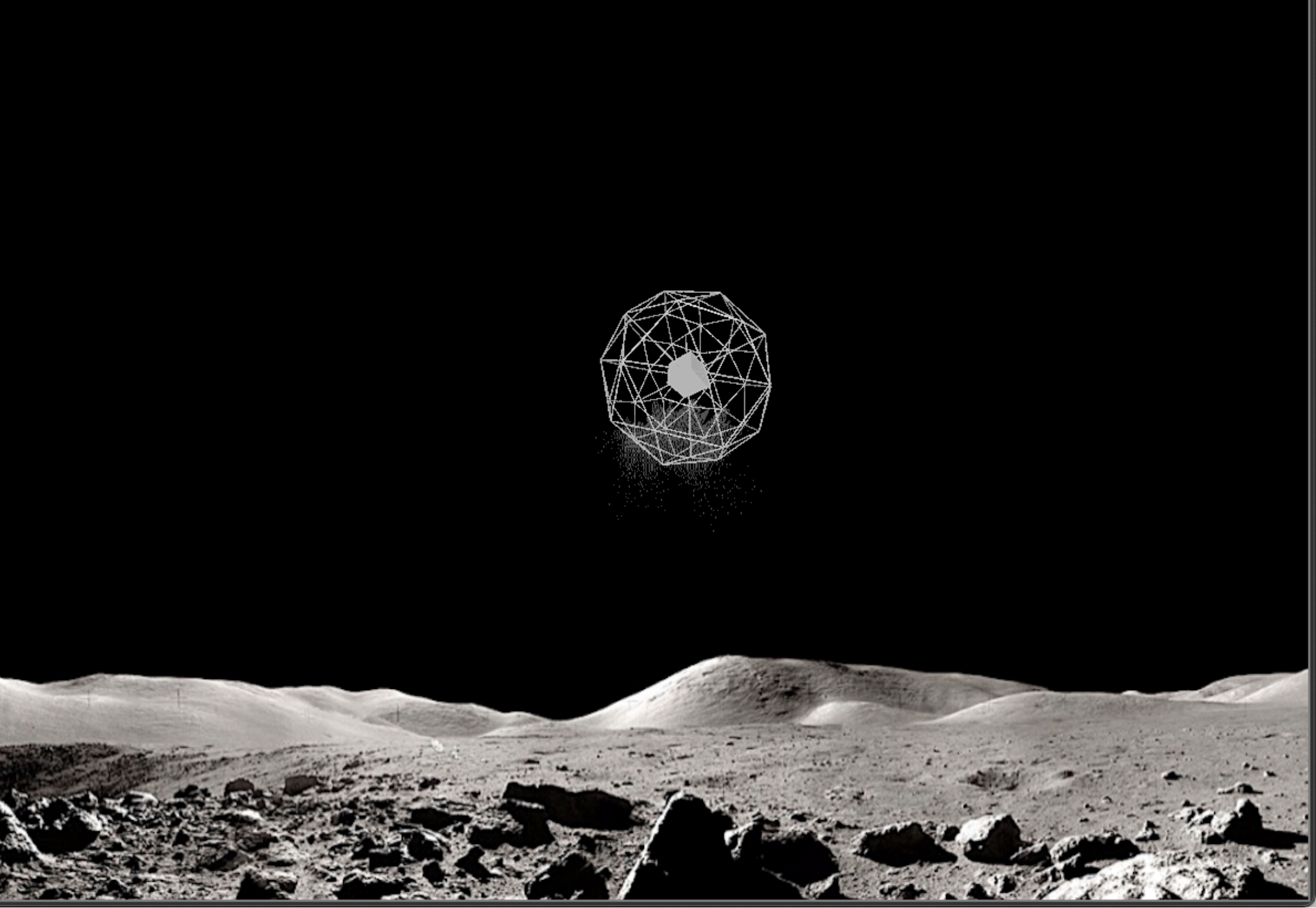
The GTL is a spherical, tethered, rolling probe. Its design is centered on mechanical simplicity and robustness, allowing it to explore high-risk environments by simply rolling and tumbling down steep slopes.
Video: GTL Bouncing Away on Moon - Created in Python.
Video: GTL Pit Exploration Scenario - Created in Python.
Key Design Features
-
Simple & Robust
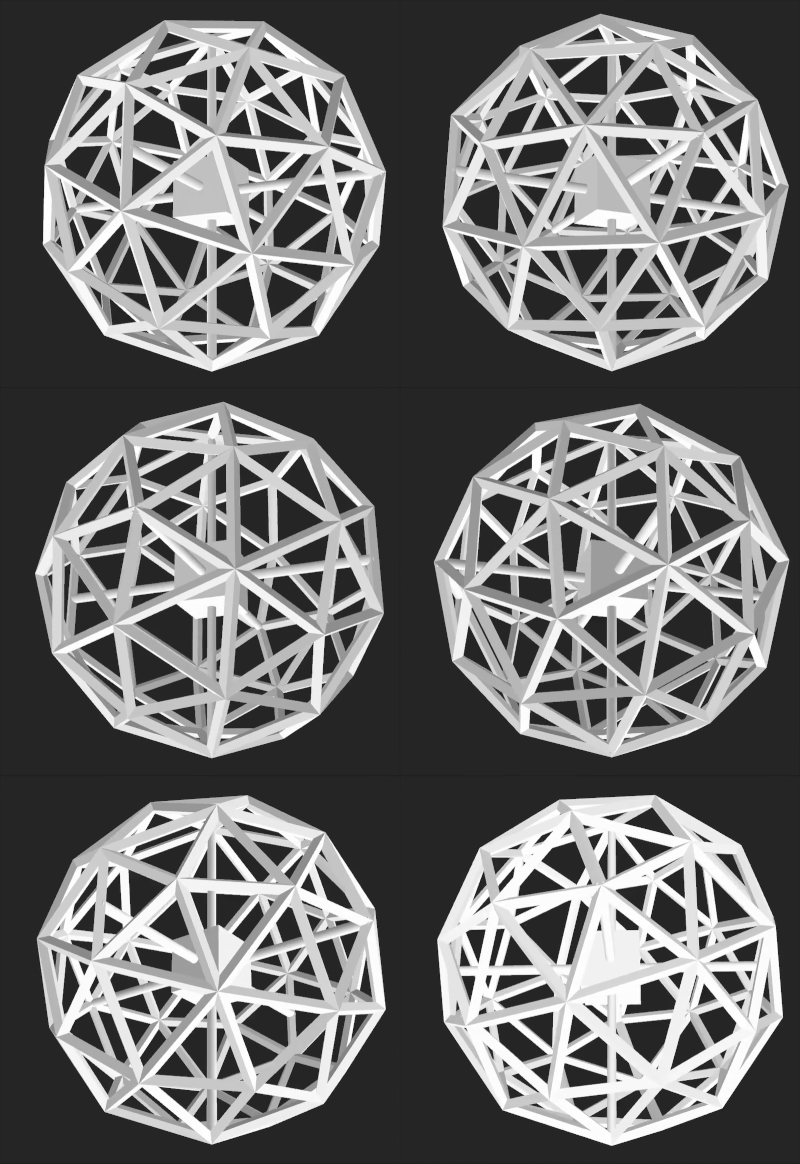
The GTL has no external moving parts. Its spherical cage is designed to withstand tumbling, protecting the sensitive instruments inside.
-
Stable Instrument Platform
An internal gimbal system keeps the scientific payload (cameras, spectrometers) stable and pointed, regardless of the outer cage's orientation or movement.
-
Tethered Connection
A tether provides continuous power and a high-bandwidth data link to a host lander or rover, and allows for potential retrieval of the probe.
-
Low-Mass & Compact
The simple design allows for a low-mass system that can be easily accommodated on a variety of lunar landers and rovers.
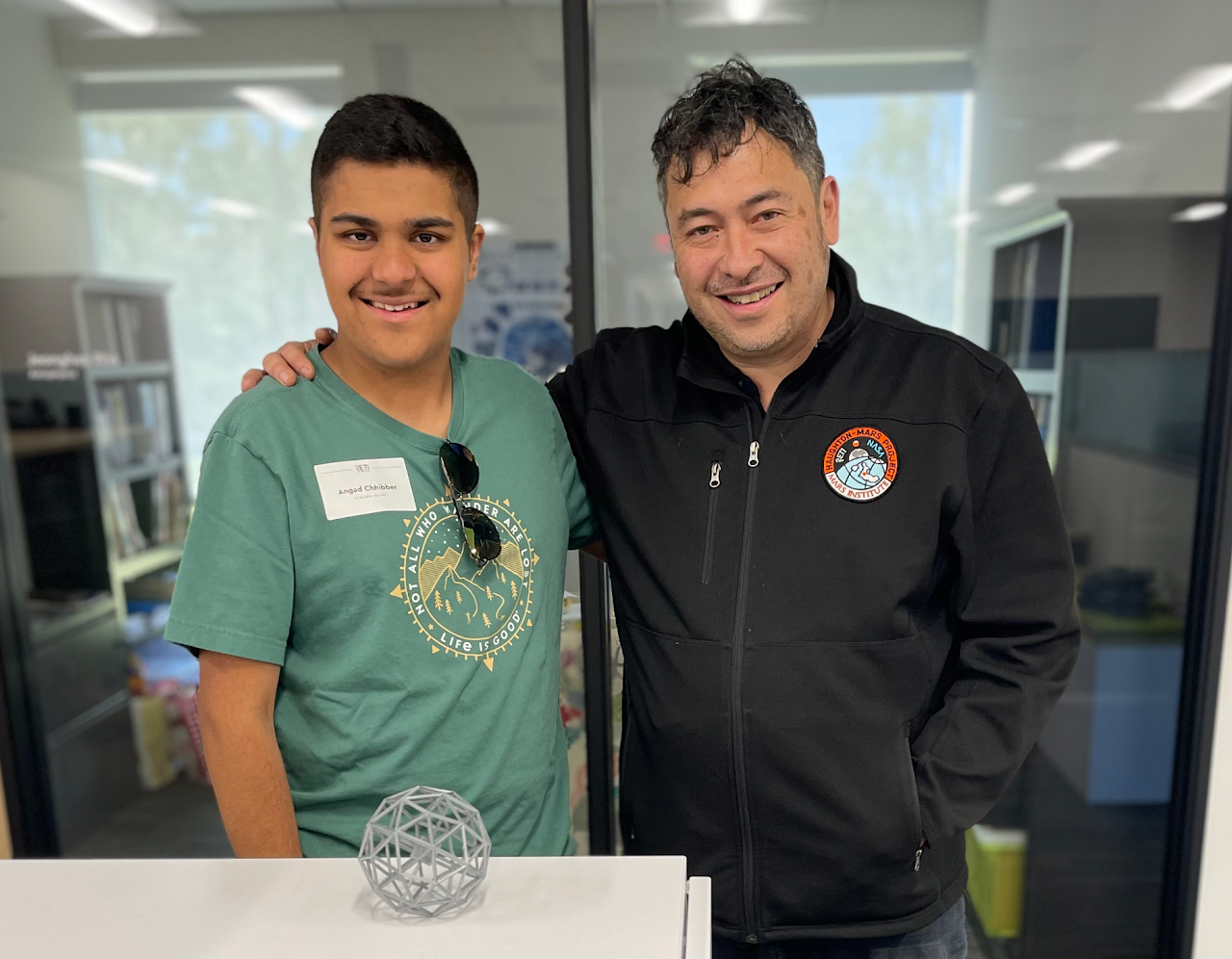
Developed under the mentorship of Dr. Pascal Lee at the Mars Institute.
Concept of Operations
Deployment
The GTL is deployed from a host lander or rover near the edge of a lunar pit.
Approach
The GTL rolls towards the pit edge, powered by an internal flywheel or the host vehicle.
Entry & Descent
The probe rolls over the edge, tumbling down the steep slope while the tether unspools.
Exploration
The GTL explores the pit floor and the entrance to any accessible lava tubes, relaying data via its tether.
Retrieval (Optional)
The tether can be used by the host vehicle to retrieve the GTL probe from the pit after its mission.
Core Technologies
Spherical Protective Cage
A robust, lightweight cage made from materials like carbon fiber or titanium alloys. It absorbs impacts from tumbling, protecting the internal payload and ensuring mission survival in rugged terrain.
Gimballed Instrument Payload
An actively stabilized platform inside the cage that keeps instruments (high-res cameras, spectrometers, etc.) isolated from the cage's rotation, allowing for stable data collection and imaging.
Power & Data Tether
A high-strength, lightweight tether that provides power to the probe and enables reliable, high-bandwidth communication with the surface asset, eliminating the need for complex radio links from within a cave.